home works contact
Role
Product Designer & Product Owner
Company
HelloPrint
Tools
Figma, Miro, Jira, Whimsical
Year
2025
Complaints Redesign

Complaints Redesign

This project focused on redesigning the complaints management flow as part of the transition to 360, HelloPrint's new internal customer service platform.

Customer service agents use this system daily to handle issues such as damaged products, delivery problems, or incorrect orders — making it a critical tool for both customer satisfaction and operational efficiency.

The Problem

Agents spent an average of 5 minutes per complaint due to fragmented information and repetitive manual tasks. The system wasn't designed for high-volume orders, forcing agents to manually reconstruct context and repeat workflows — especially for multi-product orders where a single case could take 30+ minutes.

The Objective

Migrate the complaints flow to the new 360 platform, improving efficiency, reducing operational costs and errors, and materially decreasing handling time.

My Role

As Product Designer & Product Owner, I led the process end-to-end: from discovery and prototyping to backlog prioritisation and engineering handoff.

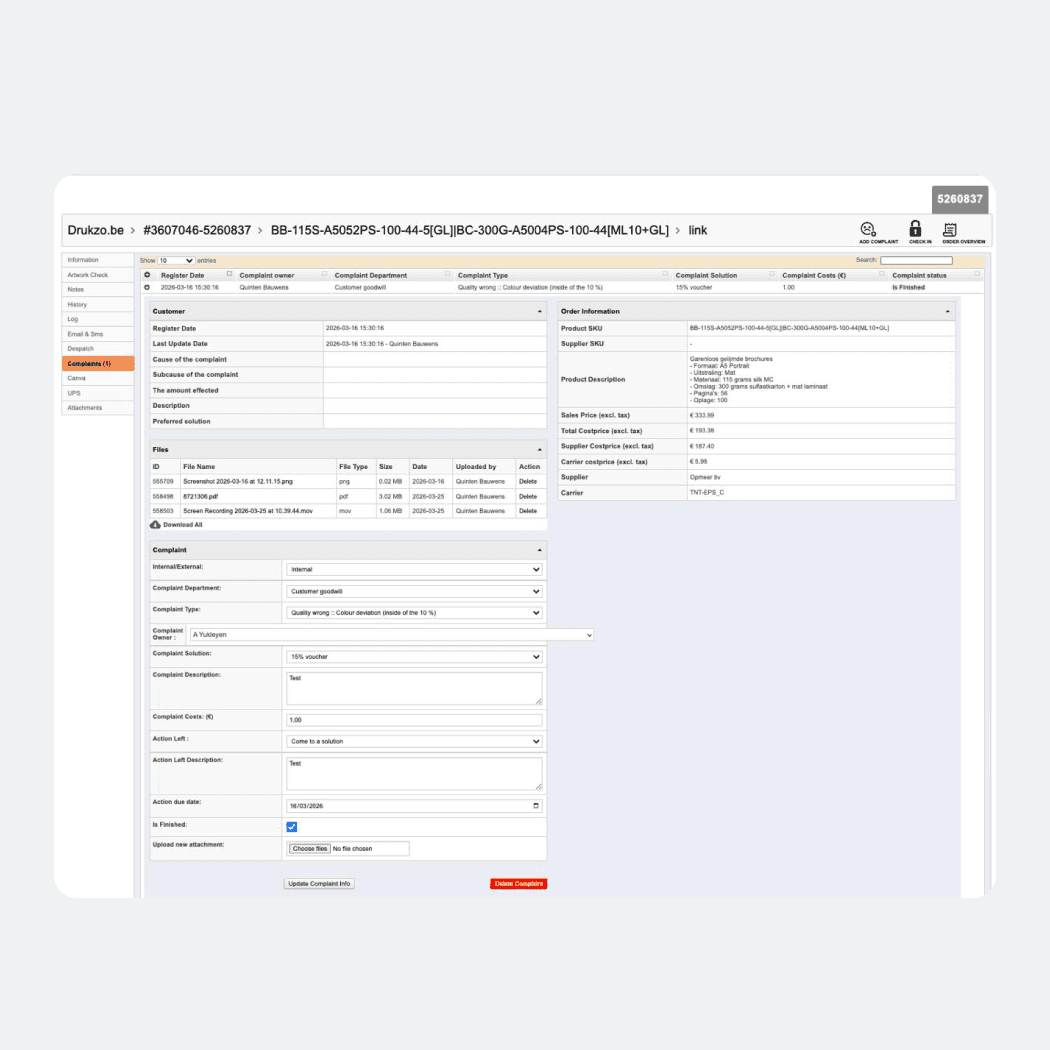
Legacy system (Presta): Complaint form
Legacy system (Presta): Original complaint form

To understand why the system failed, I observed agents using it for full working days, conducted shadowing sessions and interviews, and collected direct feedback through a dedicated Slack channel. Four critical issues emerged:

1. Constant context-switching

Up to 40% of time was lost navigating between 4–5 tabs to gather the information needed to resolve a single complaint. There was no single place where the full picture was visible.

2. Lack of actionable context

3. High manual workload

4. Repetitive workflows at scale

In multi-product orders, agents repeated the same workflow multiple times — creating one complaint per product, repeating descriptions and evidence, with no way to reuse information across complaints. Complex cases could take 30+ minutes per order.

→ The real bottleneck wasn't complaint complexity — it was the workflow the system forced: repetitive manual steps, scattered data, and constant context-switching. The solution had to centralise information and enable efficient, repeatable action.

Designing for efficient execution

1. Information Centralisation (All-in-one)

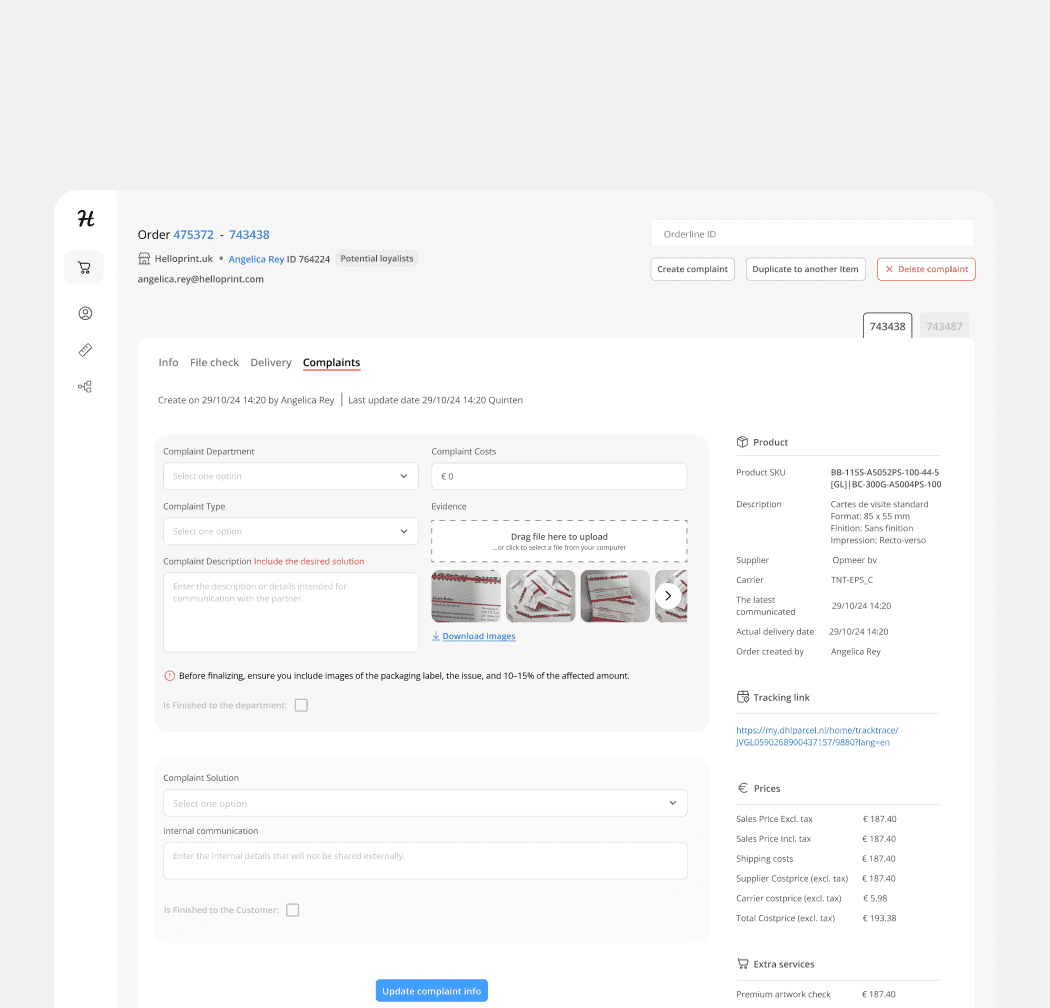
I eliminated the need to jump between tabs. I designed a unified interface where the agent has in sight: order data and contracted services, evidence history (photos and videos), and integrated resolution tools on the same screen.

2. Logical Division of Work

I structured the form into two distinct sections to separate the investigation phase (evidence collection and root cause identification) from the resolution phase (application of refunds or vouchers). This ensured agents validated all necessary information before proceeding to decision-making — improving resolution quality.

3. Automation of Repetitive Tasks

I configured the system to auto-fill critical fields — dates, IDs, agent names, cost calculations — reducing manual effort and minimising human error at the source.

4. Bulk Complaint Management (Key Feature)

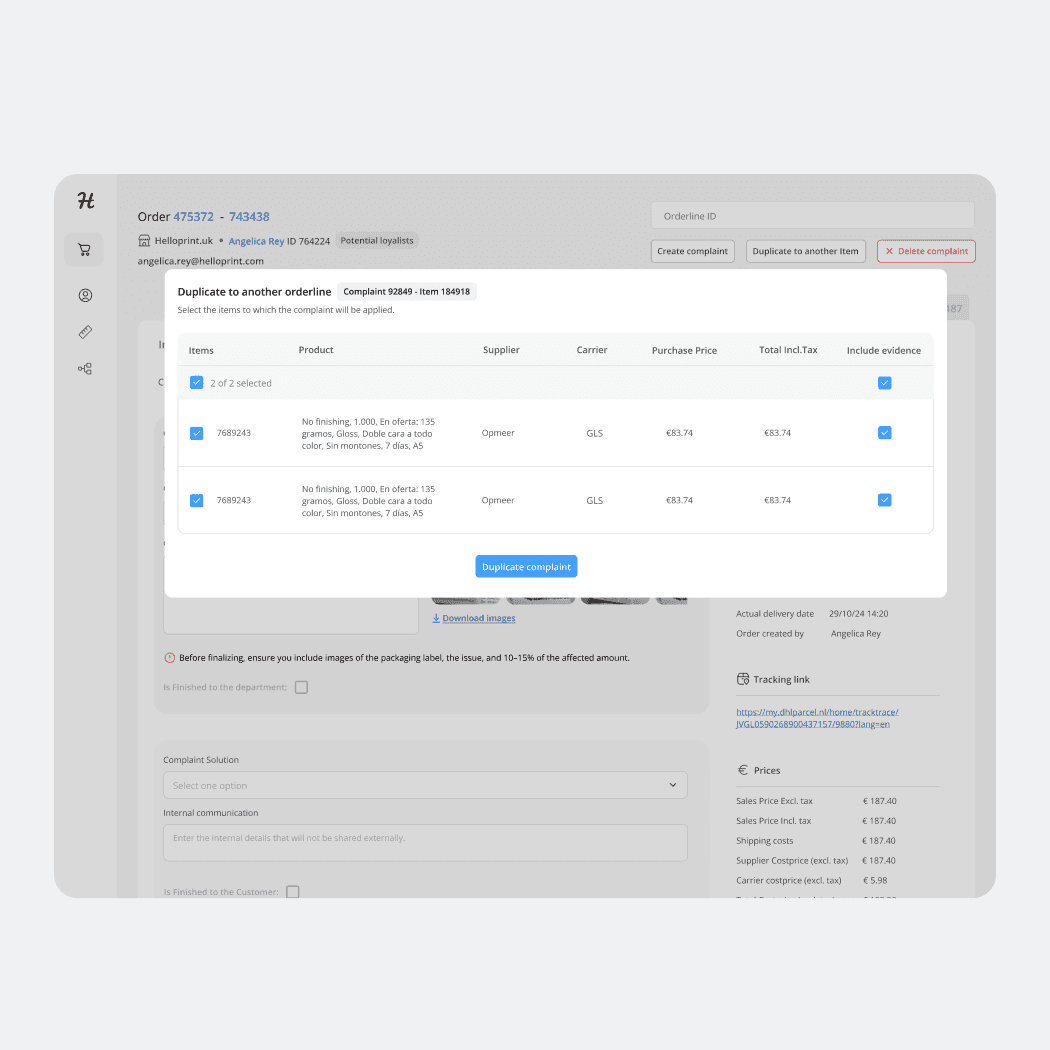
I designed a feature allowing agents to duplicate complaints across multiple order lines simultaneously: reuse structure and inputs, optionally duplicate evidence, and edit flexibly per product.

→ This eliminated the need to create complaints one by one, drastically reducing handling time in high-volume cases.

360 Platform: New complaint form
360 Platform: Complaint duplication feature
360 Platform: Bulk complaint duplication feature
5→3 min
Per product (standard orders)
30→10 min
Complex multi-product orders
↓ errors
Automated field entries
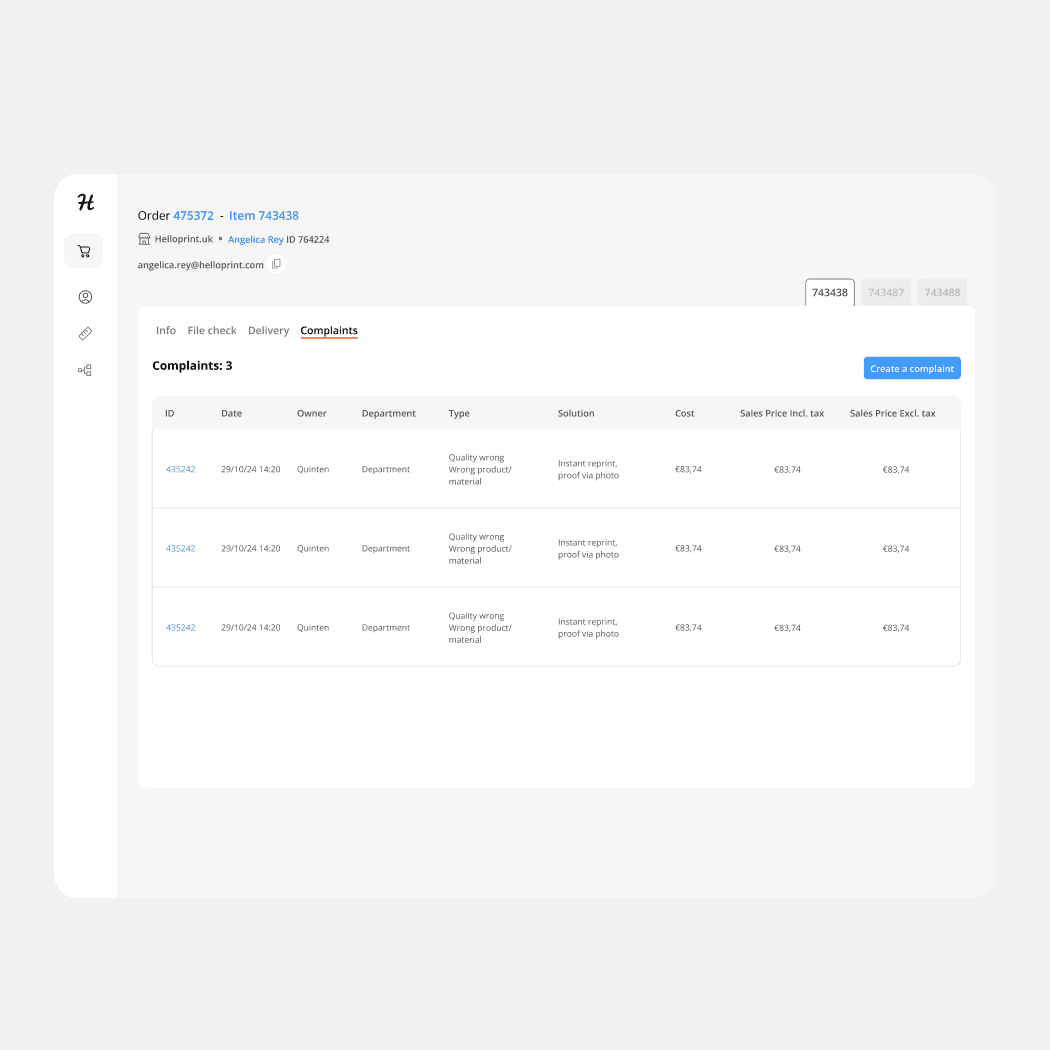
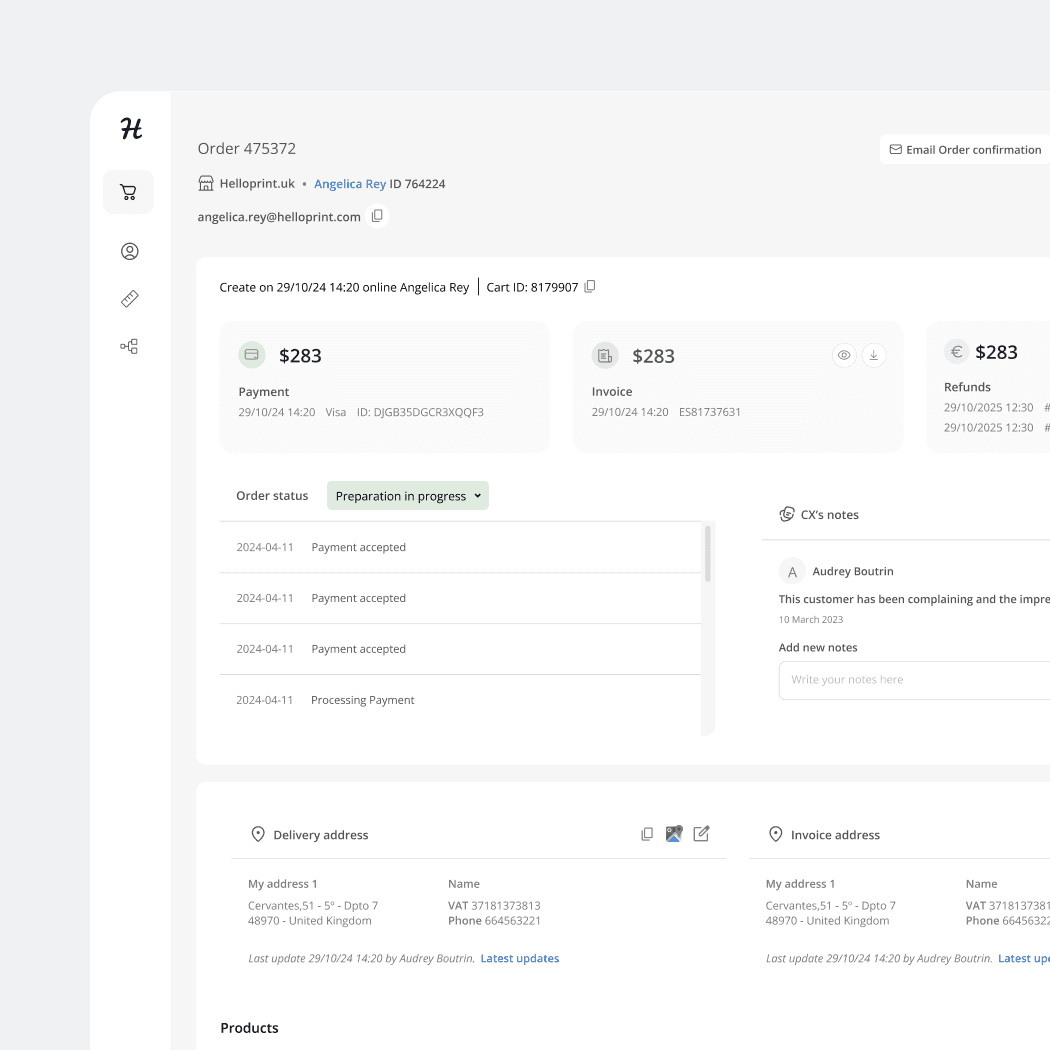
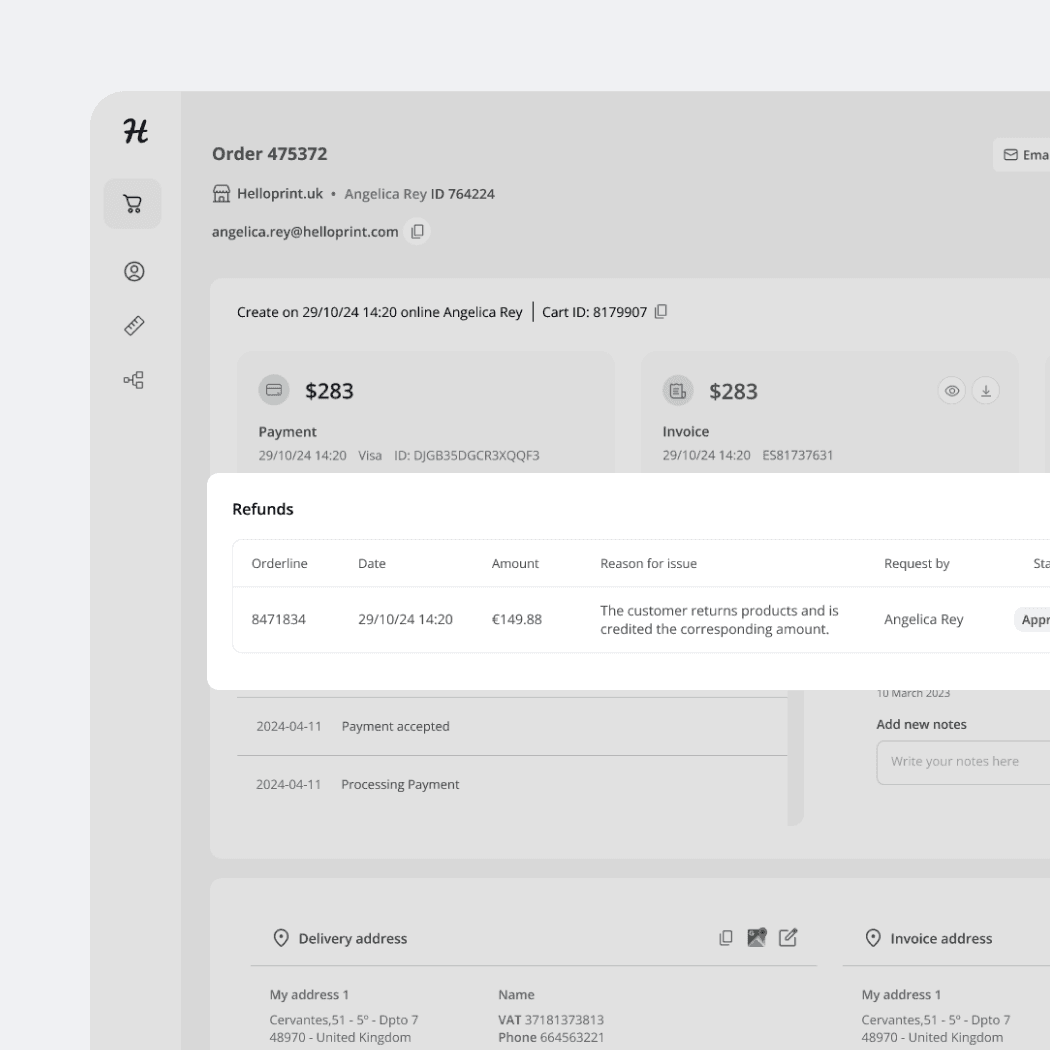
360 Platform: Complaints overview
more to explore.
Order Management 360
Refund Redesign
Refund Redesign