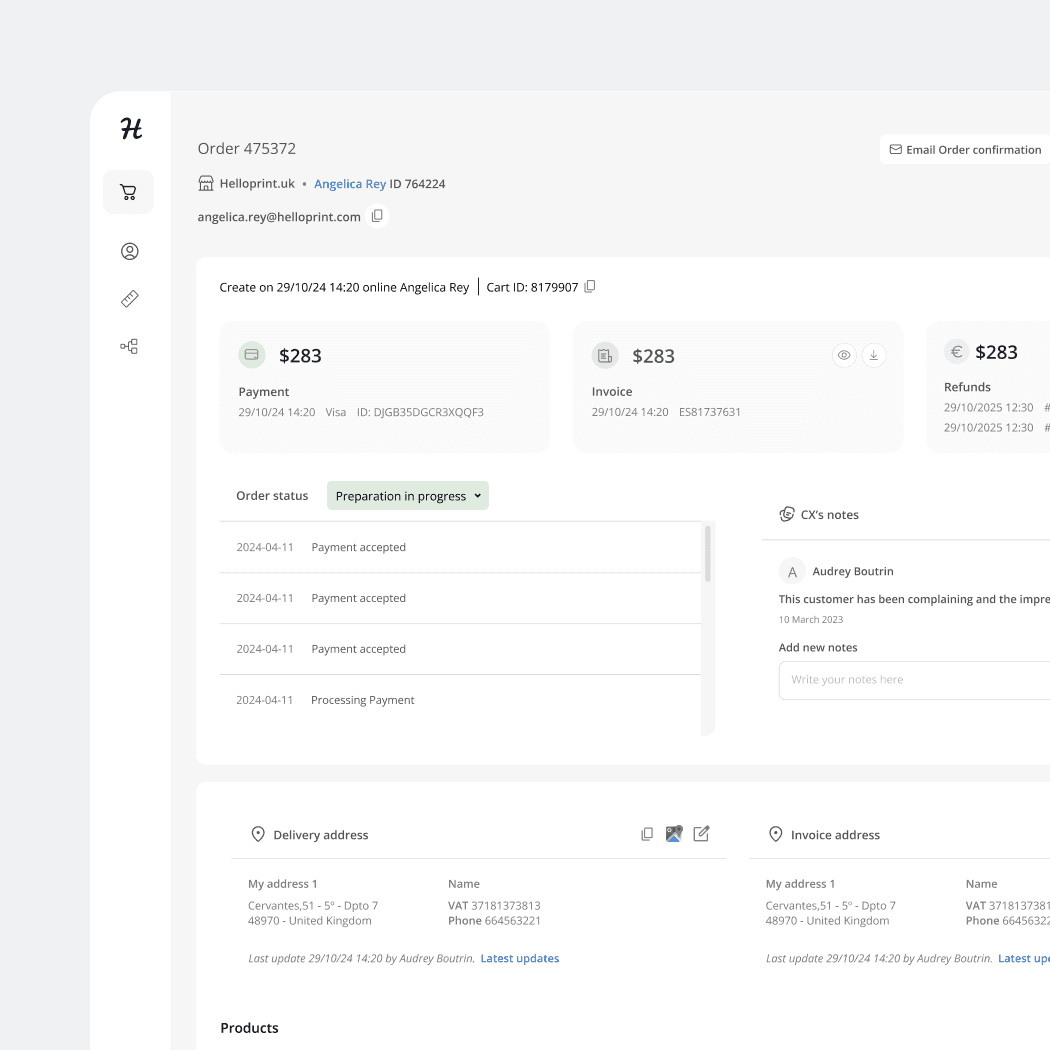
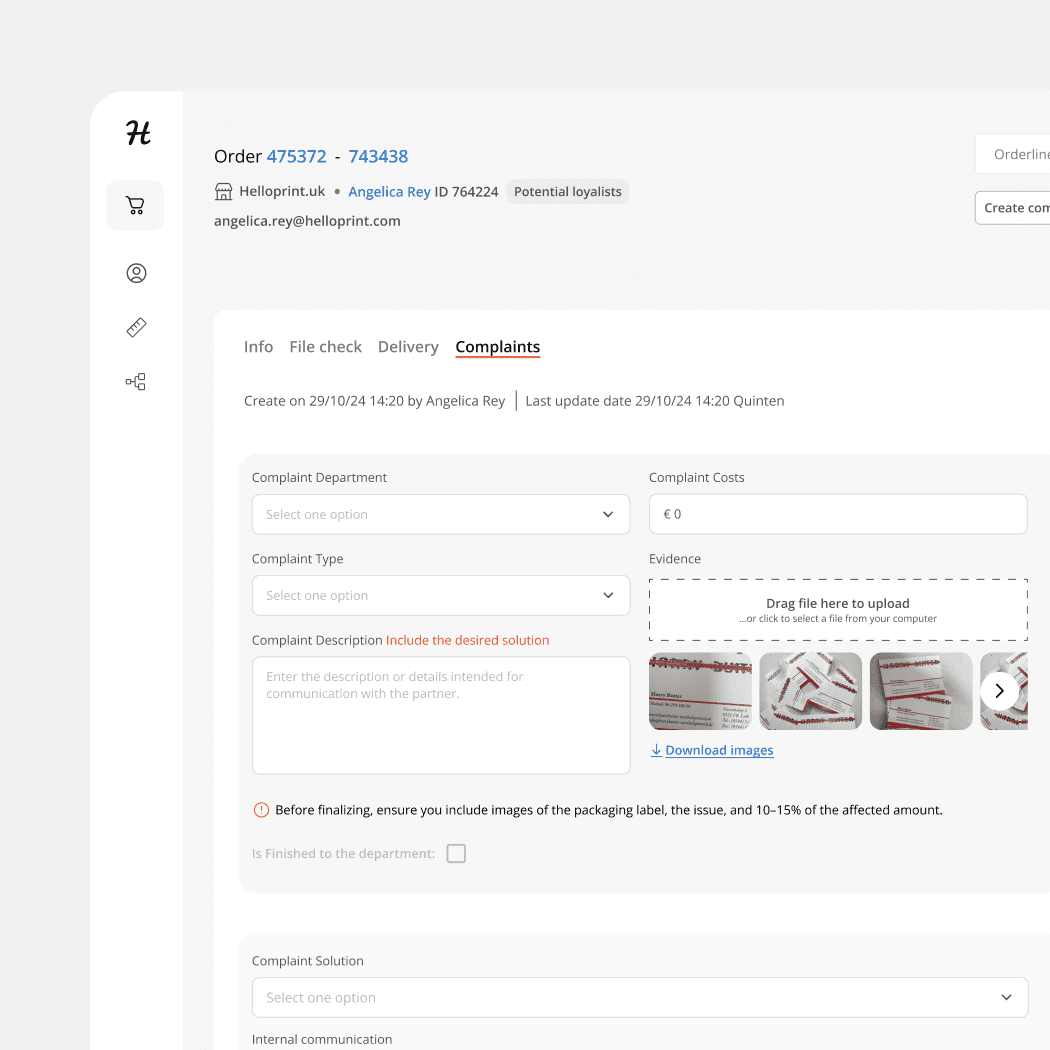
I was part of the product team focused on optimising HelloPrint's e-commerce experience across the full user journey — from discovery to post-purchase.
The team was distributed between Rotterdam and Valencia. From Valencia, I collaborated directly with Customer Service, which gave me a unique vantage point: I could connect product decisions with real user problems at scale, in real time.
The volume of Customer Service tickets revealed a structural issue in the product: users weren't failing — the system wasn't guiding them effectively.
This manifested in several recurring patterns:
The product worked technically, but it wasn't designed to scale autonomously. It transferred its complexity to the user — and to the support team.
Transform the e-commerce experience into a self-sufficient system that reduces friction, minimises dependency on Customer Service, and scales efficiently across markets.
I grounded all design decisions in real user behaviour and operational data, combining four research methods:
Hotjar heatmaps and click tracking on checkout and confirmation pages revealed:
Recurring CS issues exposed structural product gaps. The highest-volume categories were:
I observed how the support team managed these incidents, noting time invested in avoidable problems and identifying patterns in the questions agents were asked to answer repeatedly.
I researched how other e-commerce platforms evolved their experiences to identify opportunities — including sample request flows and improved checkout patterns — that would elevate the product beyond fixing existing friction.
My approach was a shift from isolated UI fixes to a more guided and scalable product experience — addressing both existing friction and opportunities to elevate the overall journey.
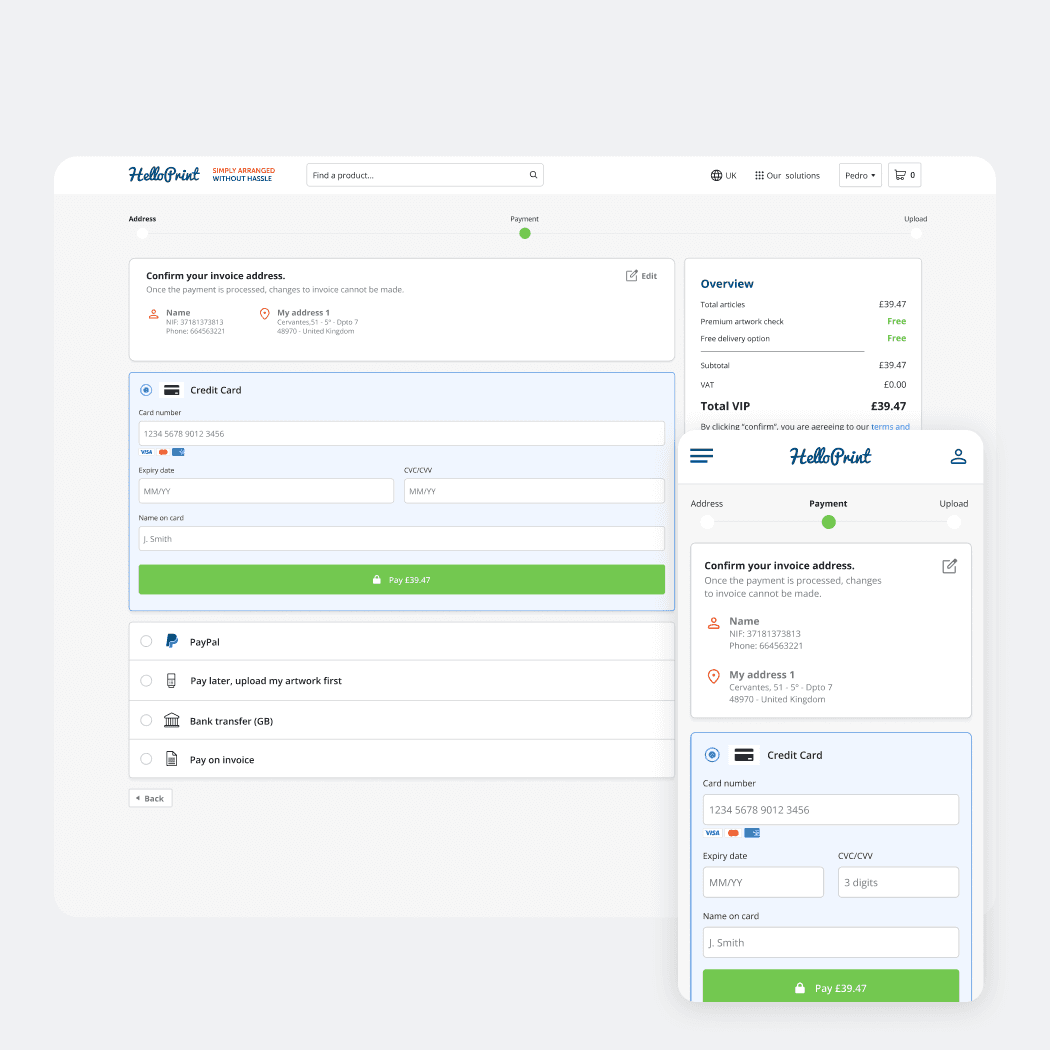
I relocated and prioritised key actions based on when users actually needed them. For example: editing the billing address before payment, surfaced proactively on the payment page — anticipating the user's need before they had to look for it.
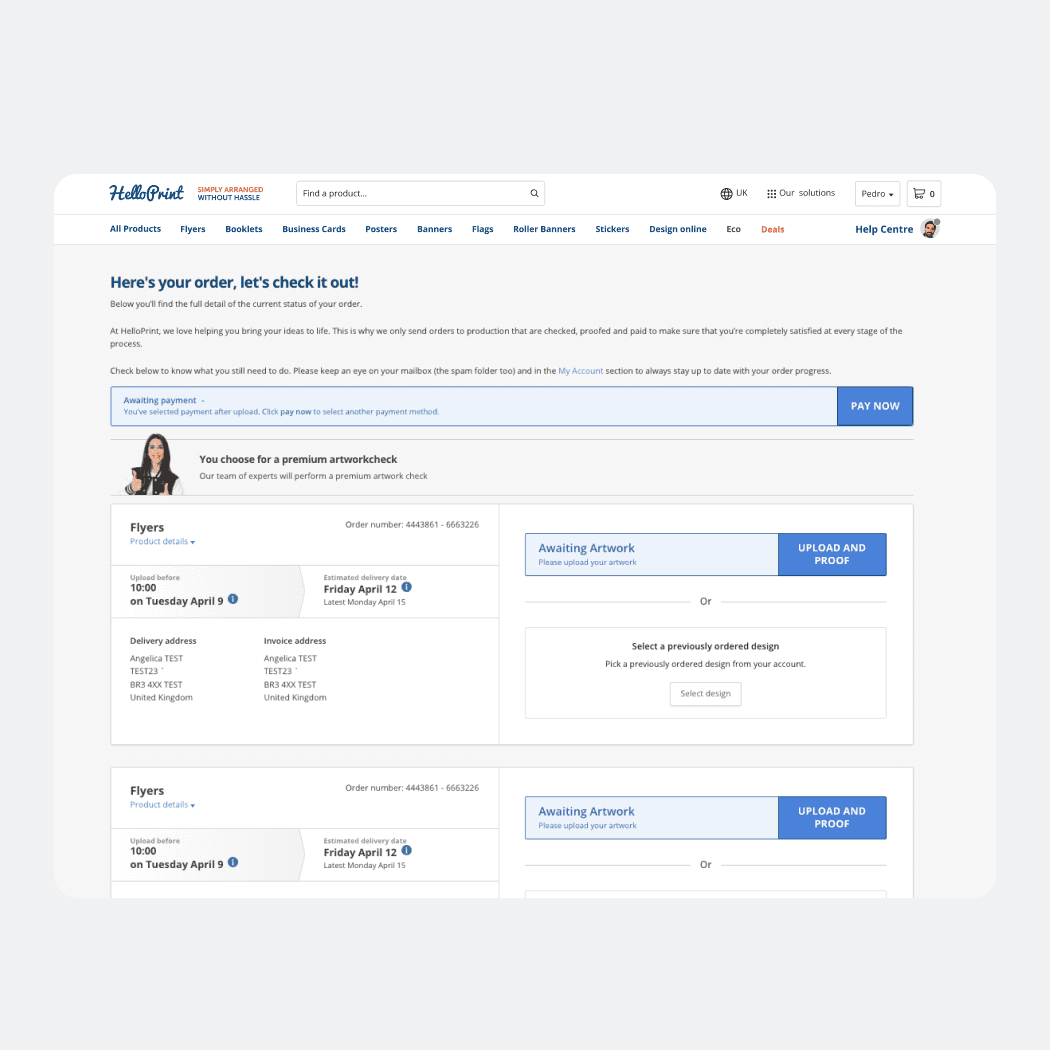
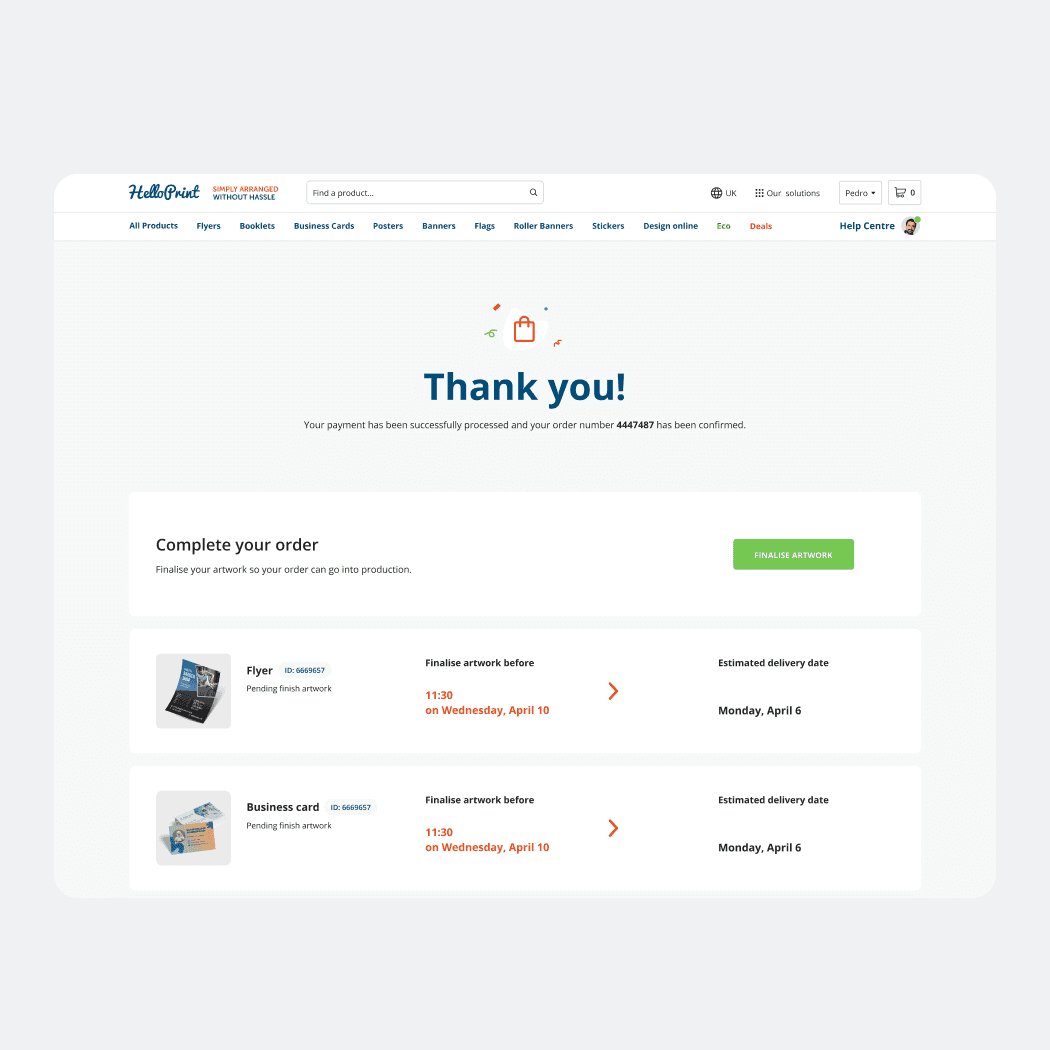
I transformed the confirmation page into a structured status system that helped users understand and act on their order. Each state was designed to answer three questions: What happened? What does it mean? What should I do next?
This system supported multiple scenarios: instant payments, pending payments (bank transfer/invoice), and required actions like artwork upload.
I designed flexible patterns to support market-specific differences — VAT display (included/excluded), localised payment methods (including France's mandat administratif) — while maintaining a consistent user experience across all markets.
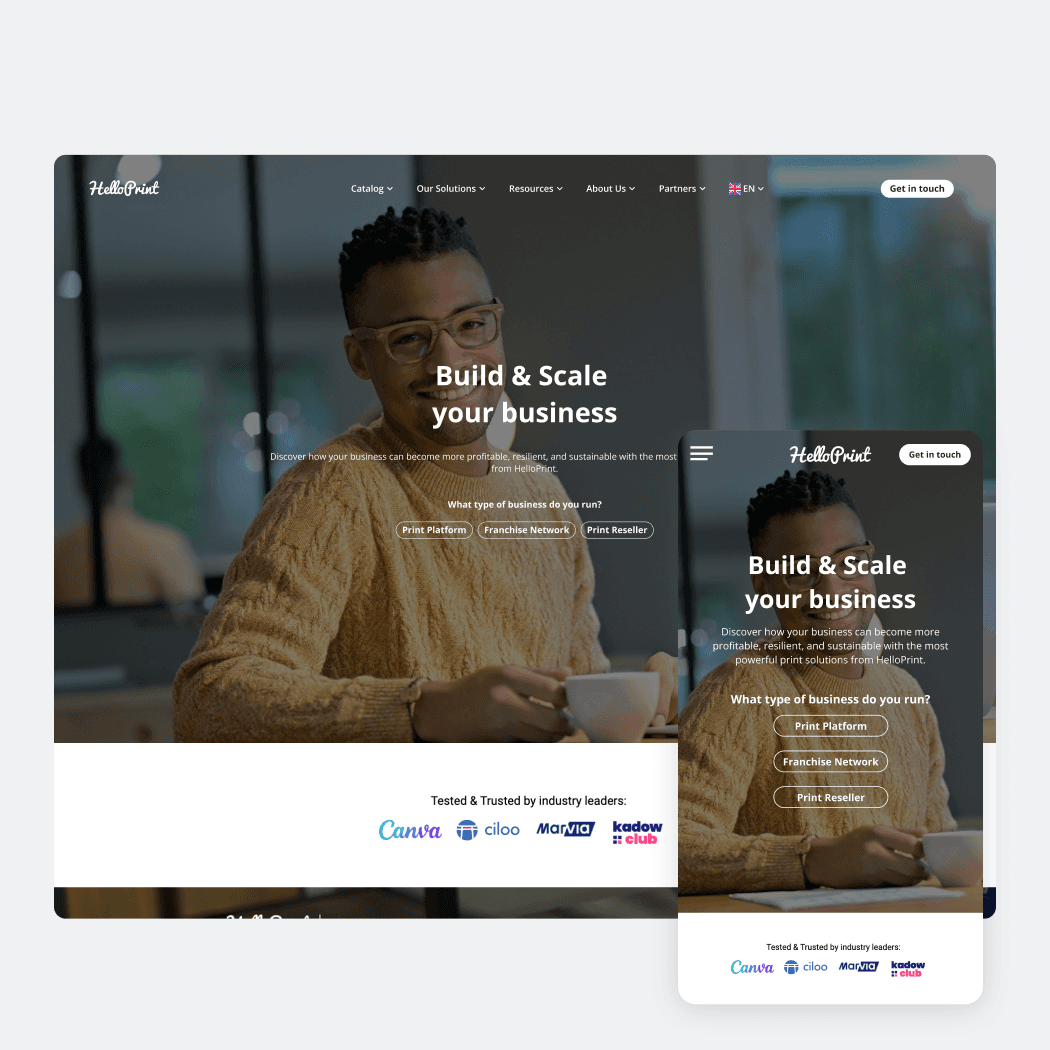
I redesigned the menu architecture to improve discoverability and clarity for both consumer and business customers, enabling users to find products and services more efficiently.
The impact went beyond interface improvements — it shifted how the product supports users and scales operationally.