home works about contact
Role
Product Designer & Product Owner
Company
HelloPrint
Tools
Figma, Miro, Jira, Whimsical
Year
2024–2026
Order Management 360 cover

Order Management 360

This project was part of the evolution of 360, HelloPrint's internal platform where agents manage customer orders — designed to replace the 13+ year legacy system (Presta).

When I joined, 360 already had an initial technical base, but it hadn't been adopted by the teams. In practice, agents continued using the old system to manage daily tasks.

The Problem

The platform did not reflect the real complexity of the operation.

As a result, two systems coexisted, generating inefficiency, errors, and a lack of traceability.

The Objective

Reduce dependency on the legacy system and move toward the progressive adoption of 360 as the primary order management tool — a complete resolution environment, not just a viewer.

My Role

Product Designer with Product Ownership responsibilities. I led the operational migration strategy and information architecture, defining functionalities in close collaboration with product, engineering, and business stakeholders.

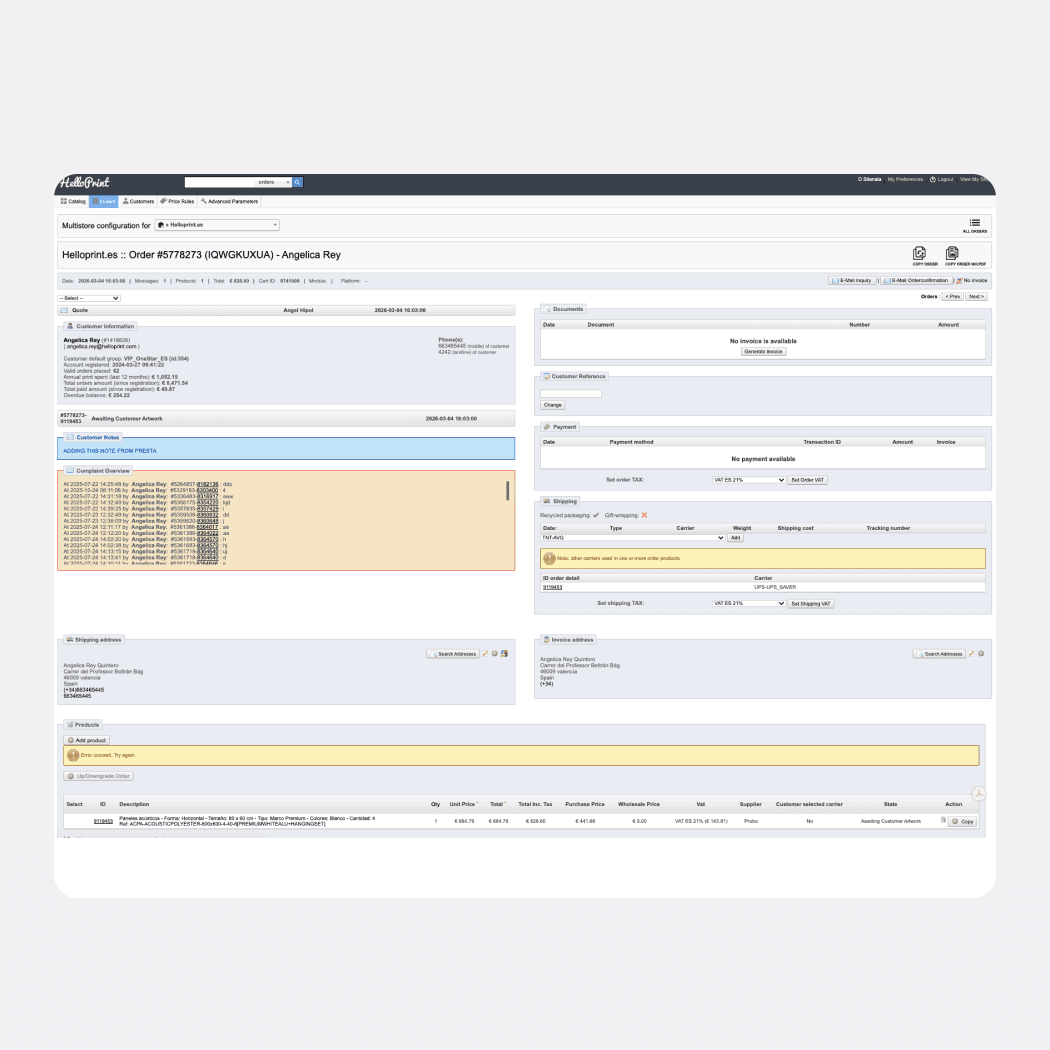
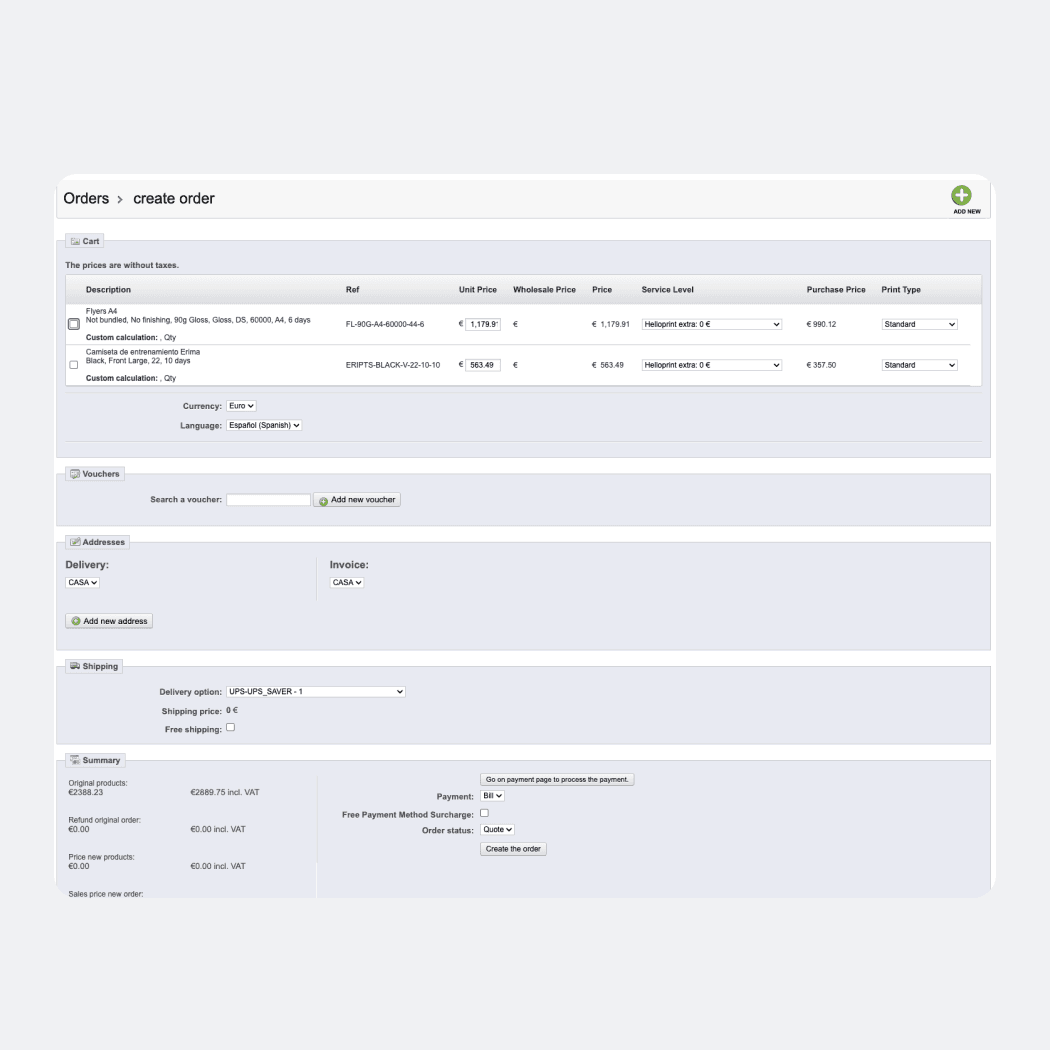
Legacy system (Presta) used for order management
Legacy system (Presta) used for daily order management

To understand why 360 had not been adopted, I didn't limit myself to analysing the interface — I immersed myself in workflows and business rules accumulated over 13+ years to identify the exceptions, dependencies, and critical failure points that weren't visible at surface level.

I combined shadowing sessions, interviews, and process analysis to surface the main friction points:

→ Aha! moment: The value was not in viewing information, but allowing action upon it. 360 didn't need a better interface — it needed to become a complete resolution tool.

From viewer to action console

Instead of redesigning screens, I redefined the product's role within the operation. The goal was not aesthetics, but enabling execution.

1. Centralisation of Actions

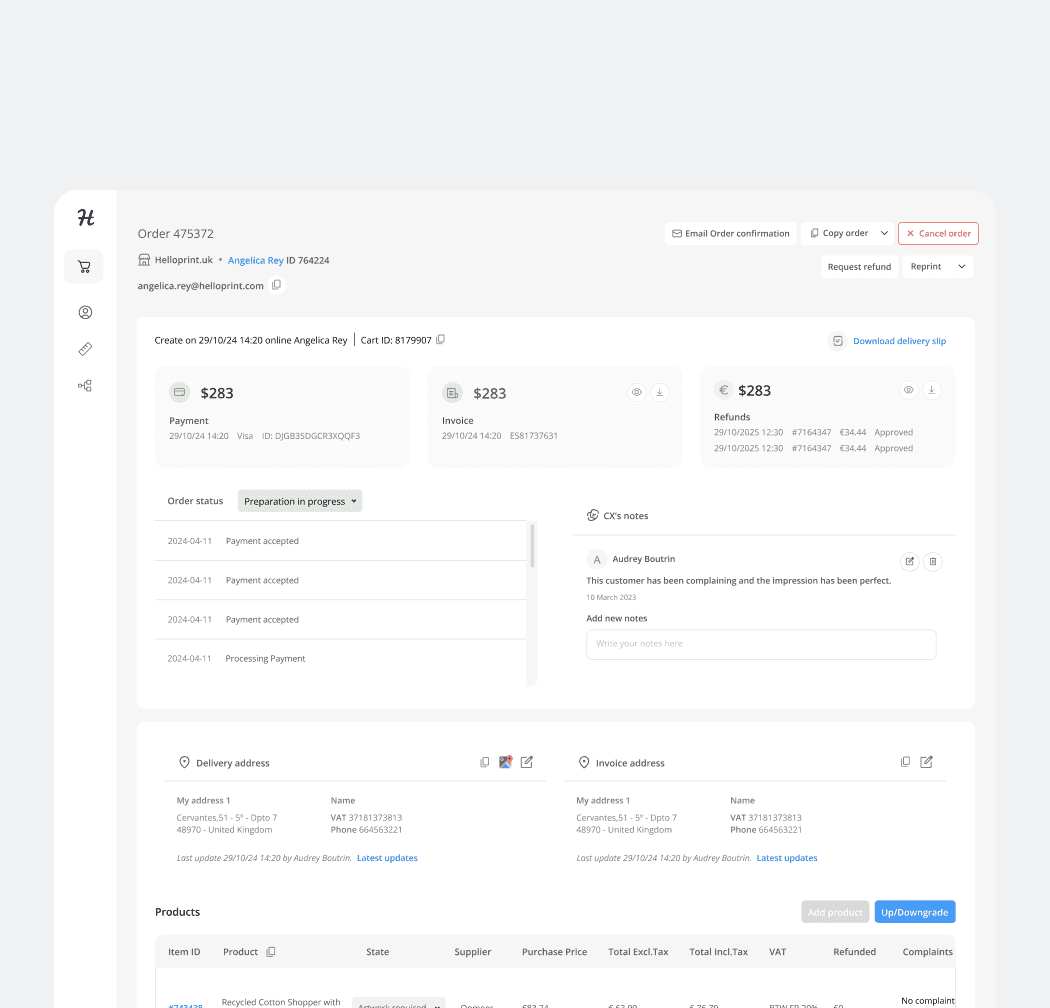
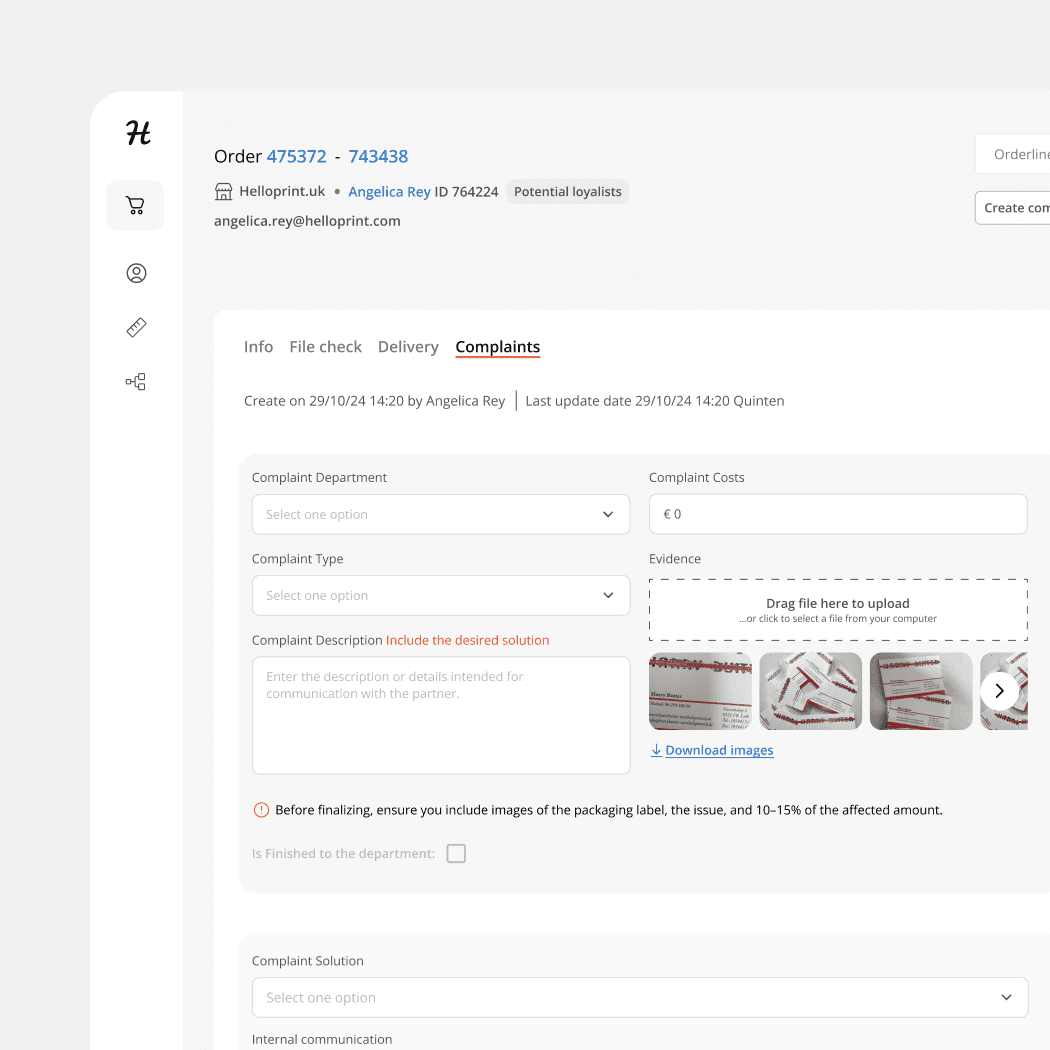
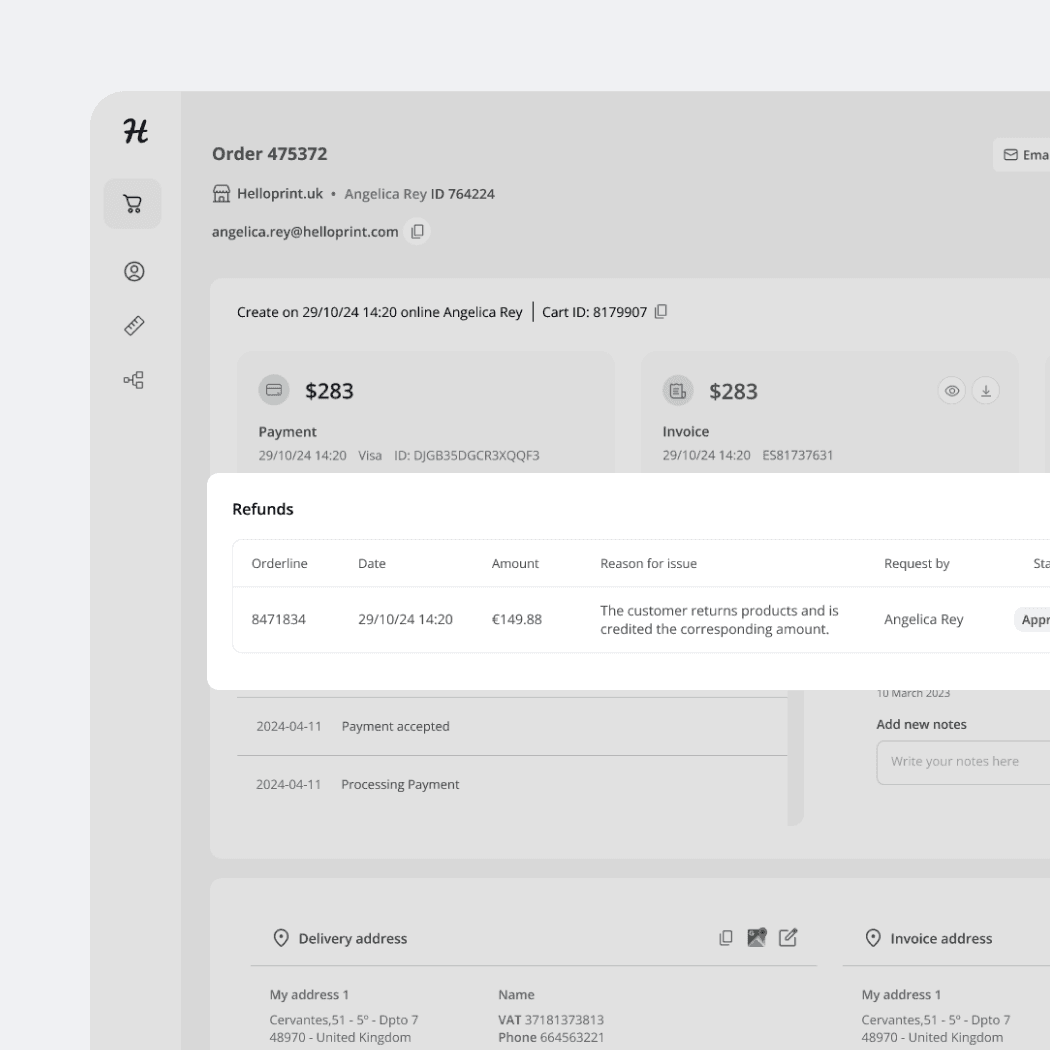
I integrated flows that previously forced a return to the legacy system: Refunds, Reprints, Complaints, Copy Order, Order Creation, and Upgrades/Downgrades. 360 went from passive viewer to active execution environment.

2. Information Synthesis

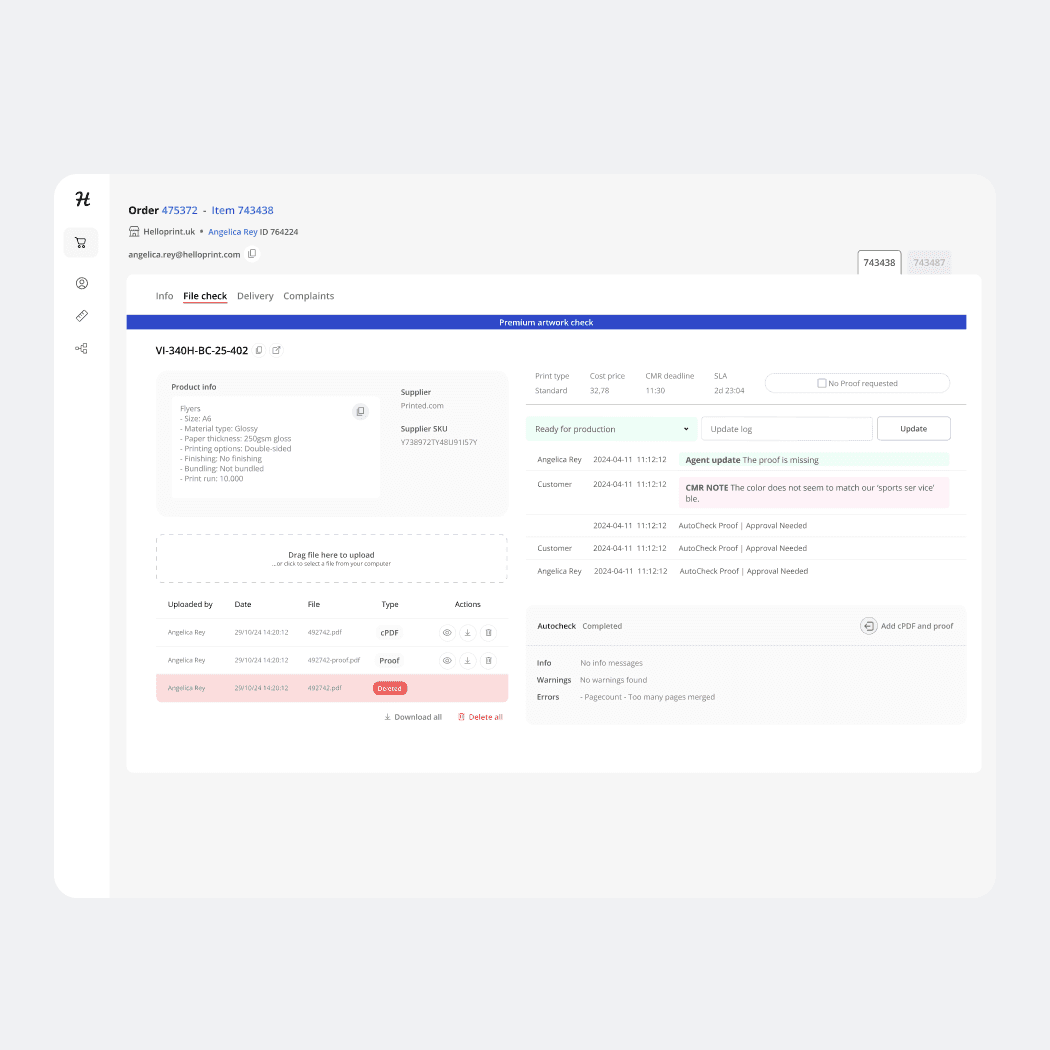
I reorganised information into 4 main areas: Info, Artwork, Delivery, and Complaints. Visual noise was eliminated and relevance was prioritised so agents could recover full order context instantly.

3. Improved Error Detection

I worked with engineering on a structure based on independent APIs. This allowed for easier failure isolation and a significantly more stable system.

4. Digitalisation of Logistics Processes

I designed the returns module, eliminating the dependency on Excel. This included integration with Paazle for automated labels and follow-up emails — centralising 100% of logistics data for the customer service team.

5. Decision Support

I integrated signals such as NPS, CSAT, and customer segmentation. The system could suggest the best resolution for each case, helping agents make more consistent decisions at scale.

6. Flows for Complex Orders (Bespoke)

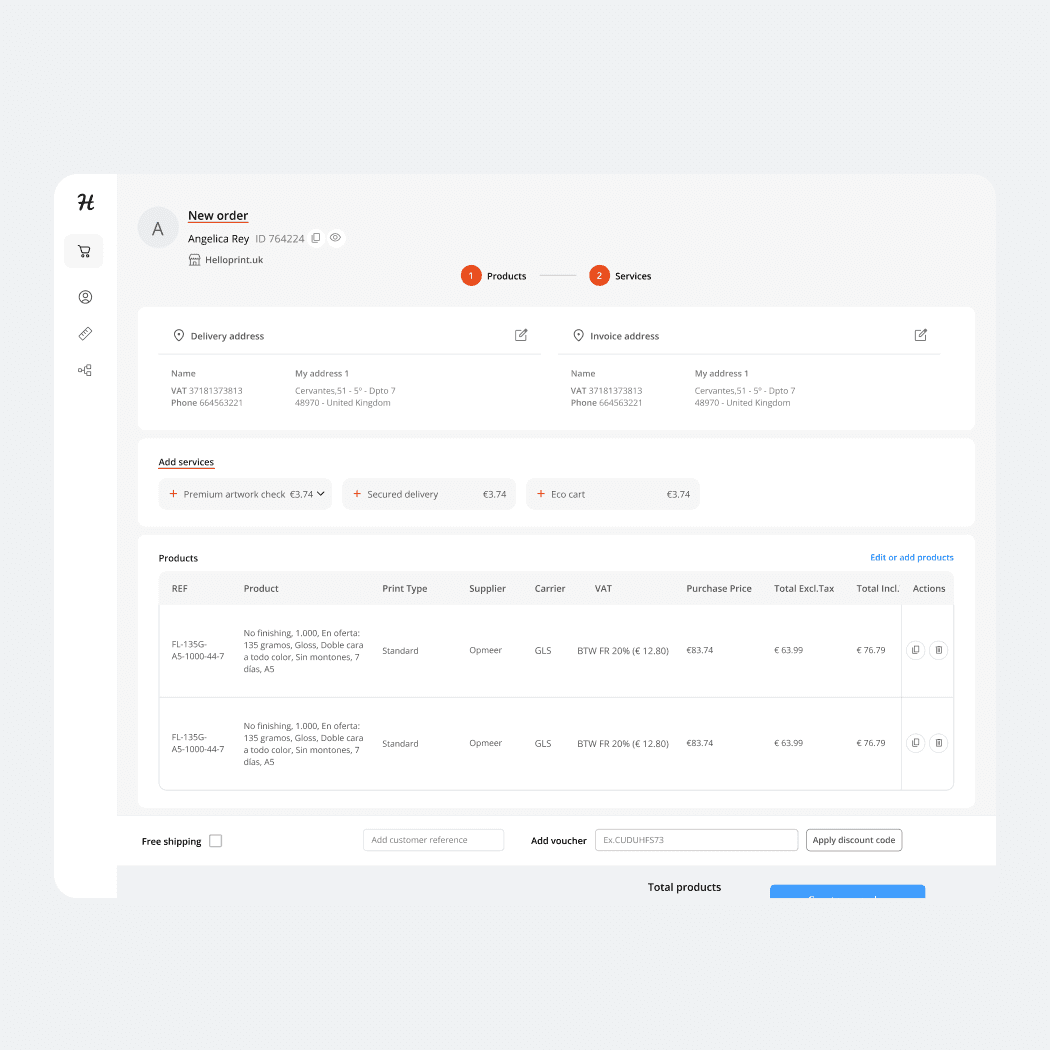
I designed the quotes flow together with the high-value team. Complex quotes could now be managed and sent directly from 360, professionalising the process and removing an entire dependency on manual communication.

360 Platform: New order overview
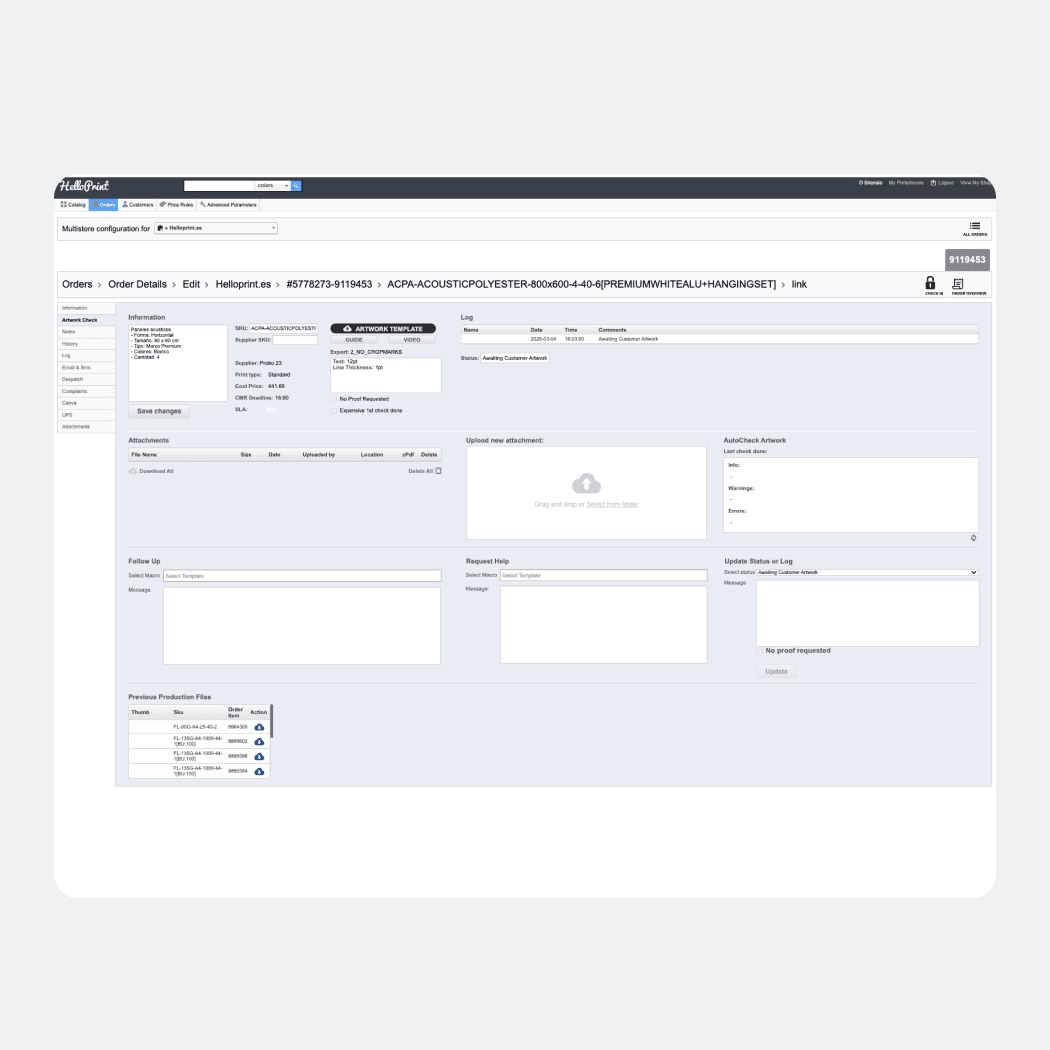
Artwork tab — Presta vs 360
Artwork tab — 360
Inside the Order — Artwork tab: Presta (left) vs 360 (right)

The project's focus was not just on improving the experience — it was on changing user behaviour and reducing dependency on the legacy system.

20+
Daily active users
Task completion time
Context-switching
0
Excel dependencies remaining
Order creation — Presta
Order creation — 360
Order creation: Presta (left) vs 360 (right)
more to explore.