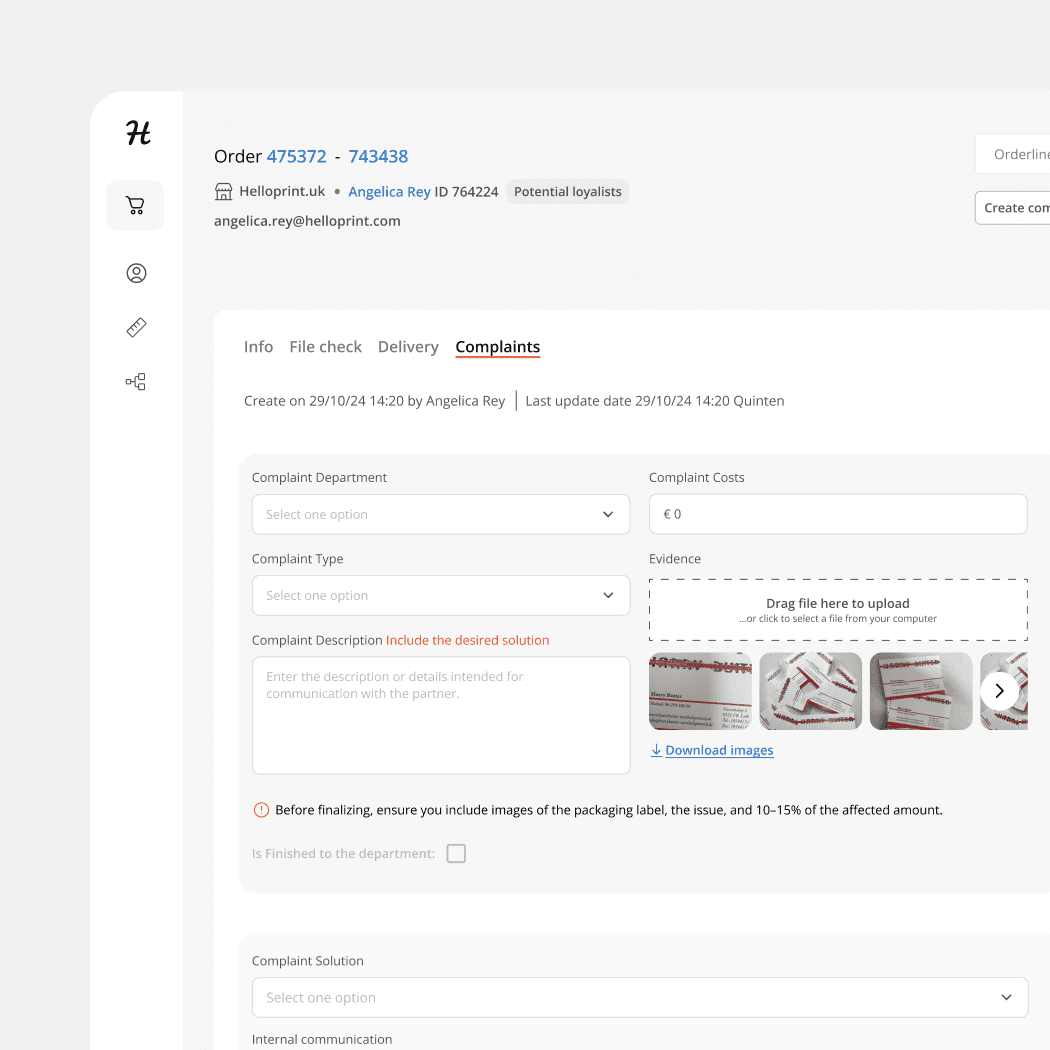
This project focused on redesigning the refund flow within HelloPrint's internal customer service platform — a critical process with direct impact on financial accuracy, customer experience, and operational efficiency.
The refund flow was highly error-prone and heavily dependent on manual validation. Agents could initiate refunds without meeting key conditions, leading to frequent errors and rework.
This resulted in:
The system relied on people to catch errors — instead of preventing them.
Redesign the refund flow to reduce operational errors and eliminate unnecessary dependency on manual validations, moving responsibility to the system instead of the Team Leads. The goal: build a guided process that prevented errors before they occurred, increased agent autonomy, and integrated business rules directly into the experience.
To understand the source of errors in the refund flow, I analysed real workflows and collaborated closely with Team Leads to identify recurring failure patterns.
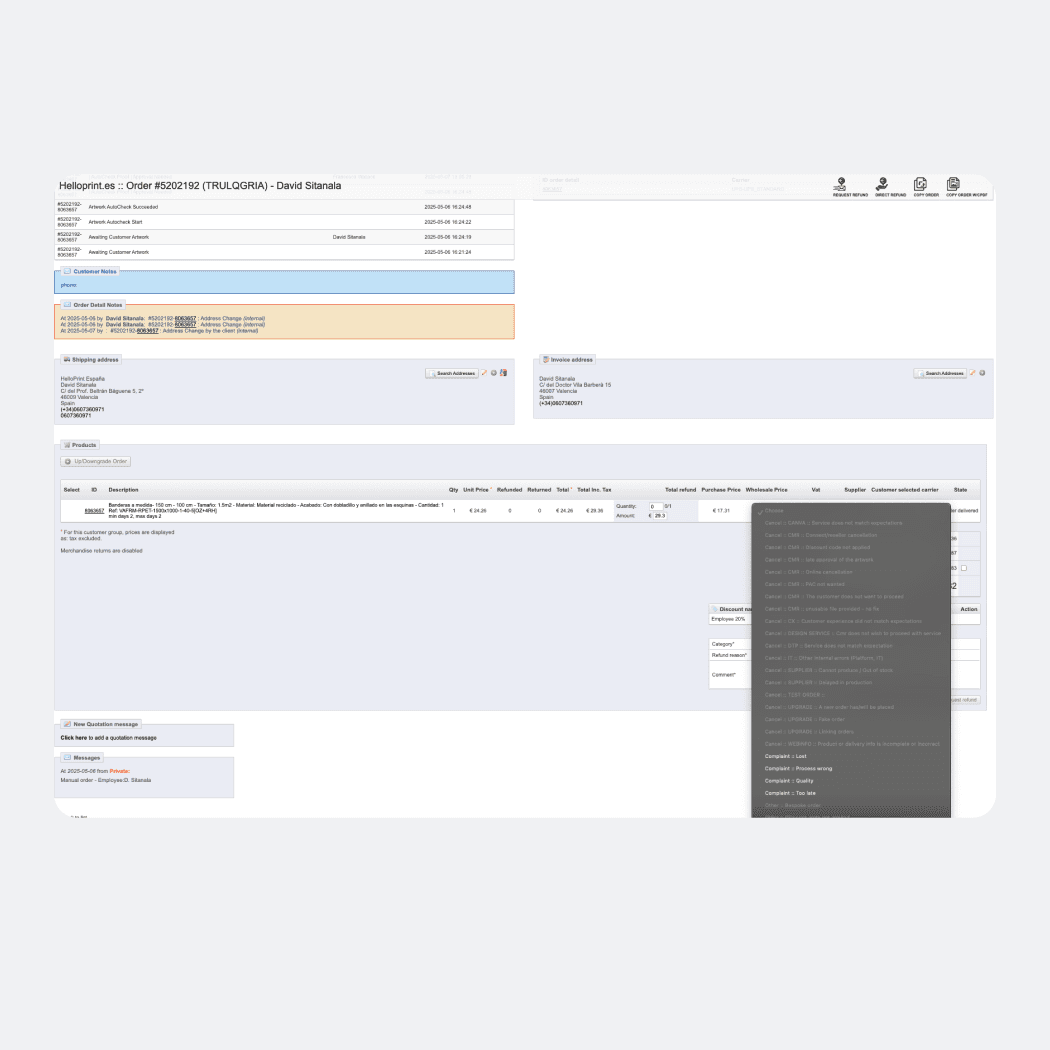
Agents could complete refund requests without meeting basic conditions — no complaint created, or order not yet canceled. The system had no enforcement mechanism at any step.
Team Leads had effectively become a control layer — manually verifying each request instead of the system enforcing rules. This was unsustainable at scale.
Most cases required Team Lead review — including low-risk, straightforward scenarios — creating significant bottlenecks and slowing down the entire process.
The system treated all refund types (complaint, cancellation, upgrade/downgrade) identically, despite each having different rules, requirements, and risk profiles.
Outdated and unused options increased decision complexity and made errors more likely — not from agent carelessness, but from a system that provided no clear path.
→ The issue wasn't agent error — it was a system that failed to enforce rules. Instead of guiding decisions, it relied on manual validation, transferring responsibility from the product to the team.
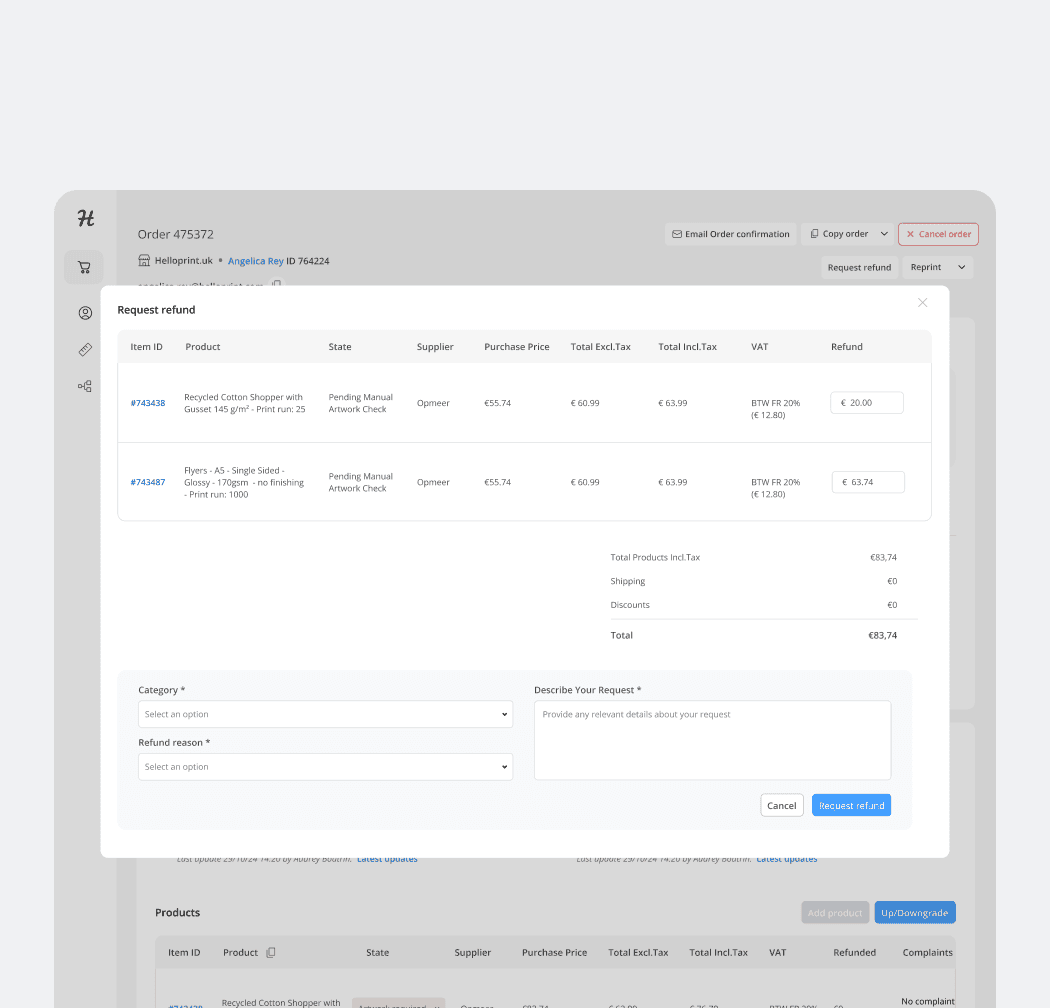
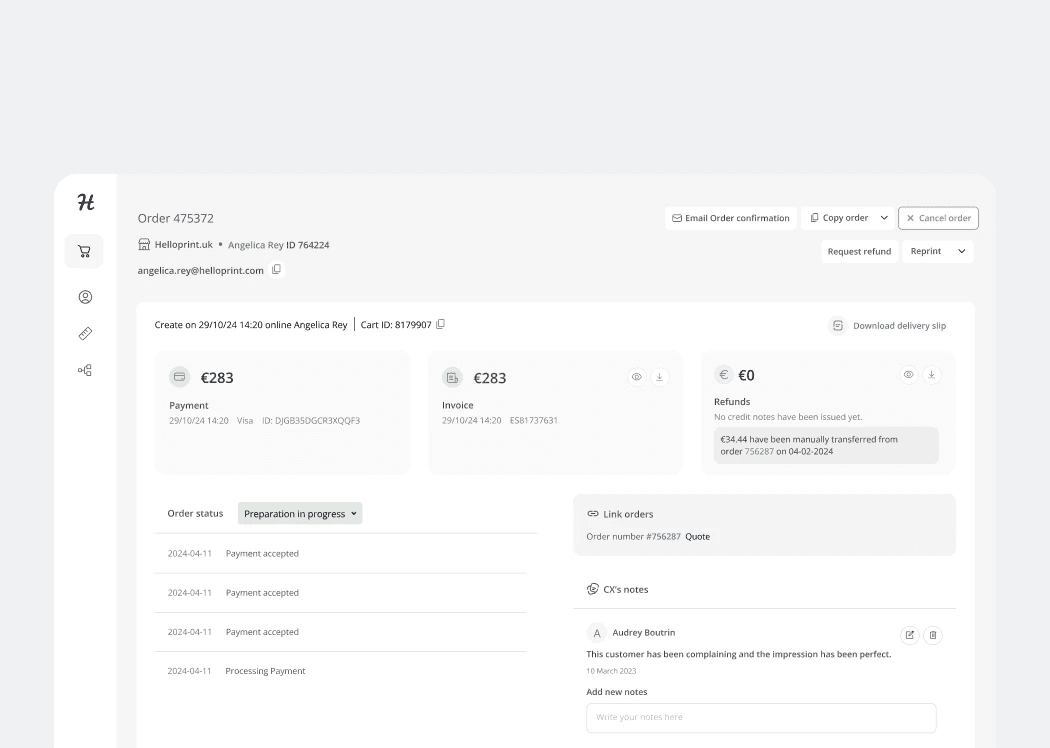
I redesigned the refund flow by moving responsibility from Team Leads to the system itself — integrating business rules, validations, and automation directly into the experience.
System validations now prevent incorrect requests before they can be submitted:
Instead of a single generic flow, the system now adapts based on the scenario — Complaint, Cancellation, or Upgrade/Downgrade. Each flow activates only its relevant fields, specific validations, and corresponding business logic. Agents are no longer navigating a one-size-fits-all form.
I redefined approval logic based on risk level:
Auto-fill of refund amounts in full refunds, removal of unnecessary fields, and elimination of redundant inputs — reducing manual effort and error risk simultaneously.
Direct access to the complaint form from the refund flow, enabling agents to complete missing prerequisites without losing their context or having to restart the process.
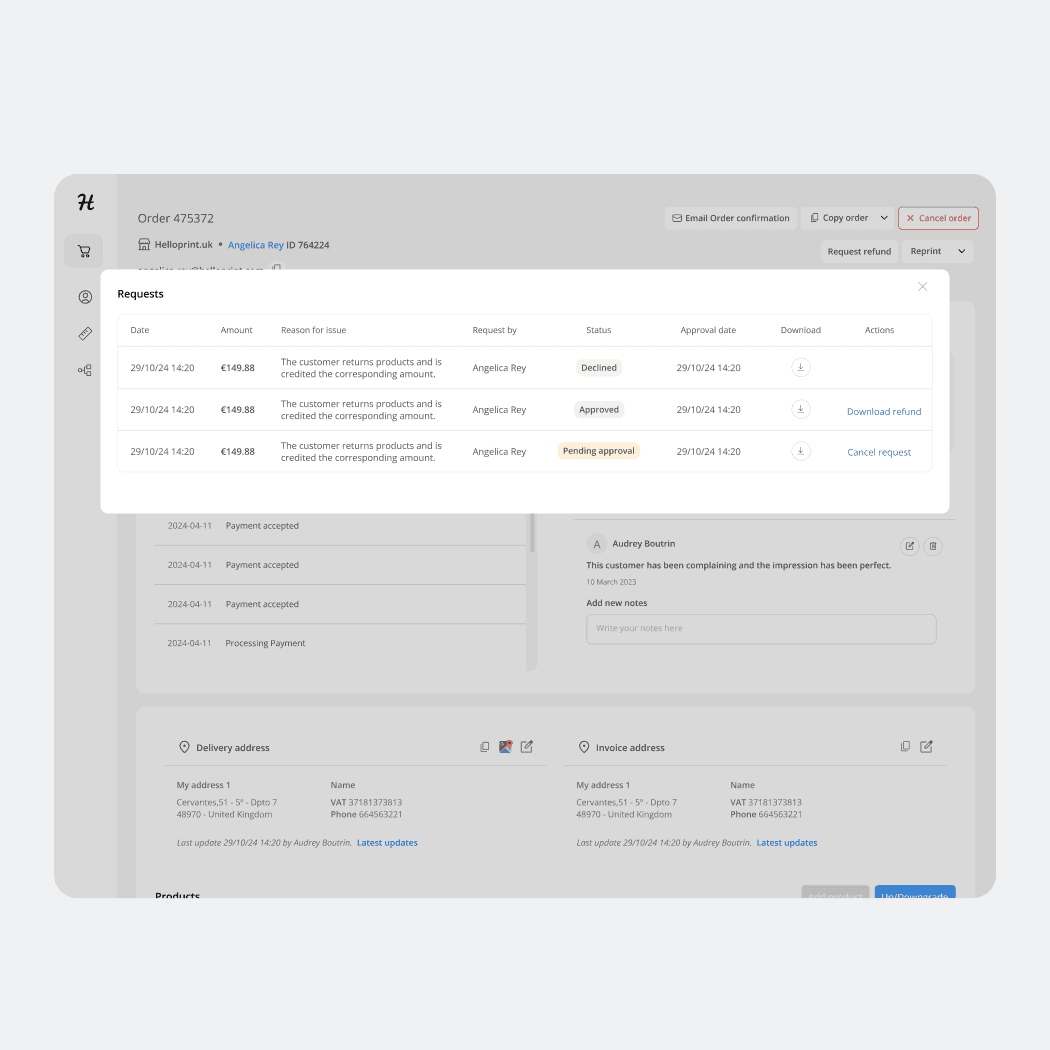
Clear statuses (pending, approved, completed), logging of the responsible agent, visibility of actions and key dates, and the ability to delete incorrect requests before processing. The process now has a full audit trail.
The redesign moved from a reactive process dependent on manual validation to a guided, more autonomous, and reliable system.
The system no longer relies on manual validation to ensure correctness — it enforces it by design.